Accelerating Regional Collaboration & Research in Ghana
The RIC Project is a collaborative initiative driving inclusive innovation, entrepreneurship, and research commercialisation across five key regions in Ghana. By integrating a Gender, Equity, and Social Inclusion (GESI) lens, the project ensures a balanced and diverse approach to solving community challenges through research and innovation.
Through strategic partnerships with universities and industry, the program empowers students and researchers to tackle societal challenges by turning ideas into viable solutions.
Key Activities and Outcomes
The program connects academia and industry through research, innovation workshops, and internships—building skills and launching student-led ventures that tackle health, climate, and poverty while driving job creation.
Regional Reach & Collaboration
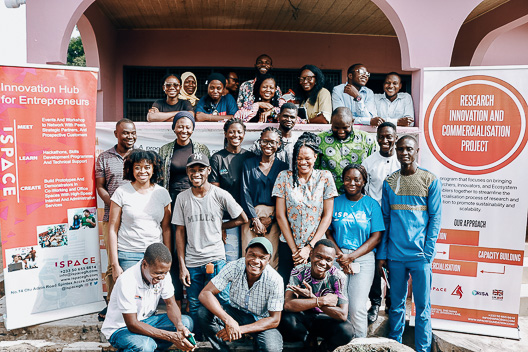
RIC was implemented in 5 regions across Ghana, connecting entrepreneurs, researchers, startups, and partners to build a stronger & more inclusive innovation ecosystem.
Co-Creation & Capacity Building
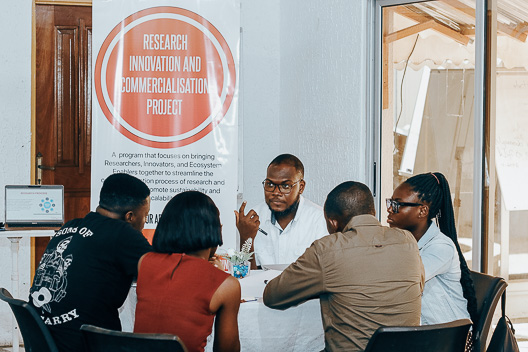
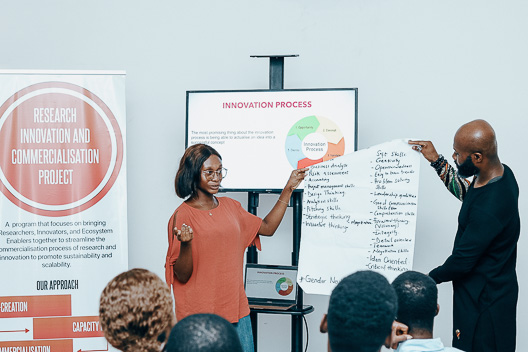
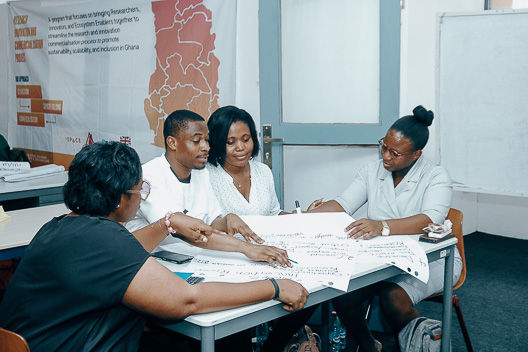
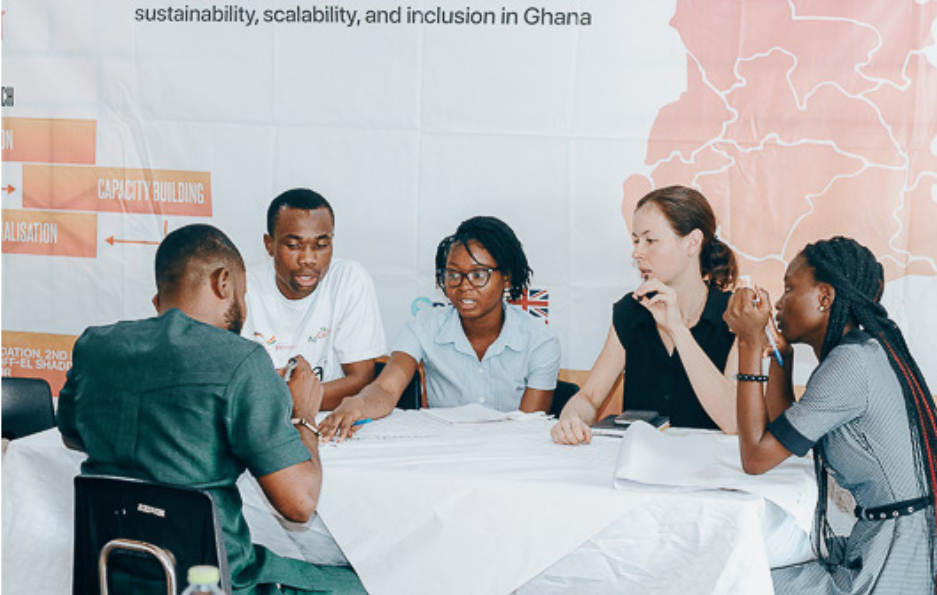
Through workshops, RIC identified research gaps and trained participants in entrepreneurship, project management, IP protection, and design thinking.
Innovation Infrastructure
RIC set up five Research Desks, supported five market-ready prototypes, and created a toolkit to help innovators turn research into practical solutions.
Impact & Ecosystem Growth
The program strengthened university-industry links, backed student ventures, and promoted scalable solutions in health, climate, and poverty.
Impact of the Research, Innovation, and Commercialisation (RIC) Program
The Research, Innovation, and Commercialisation (RIC) Program has played a key role in strengthening Ghana’s innovation ecosystem by building capacity, fostering collaboration, and providing practical tools that support sustainable development.
- Trained 30+ Hub Managers and Researchers to lead research-to-impact initiatives and support student innovation and university-industry partnerships.
- Developed a Practical Toolkit to help researchers, hubs, and academic institutions turn ideas into commercially viable solutions.
- Strengthened Ecosystem Linkages by connecting academia, industry, and innovation hubs, encouraging knowledge exchange and scalable impact.
Through these achievements, RIC is advancing applied research and inclusive entrepreneurship, and shaping a new generation of innovators committed to solving Africa’s most pressing challenges.